
Preparing for cascading risk

We may be under-prepared for the cascading effects of health policy changes
The U.S. healthcare industry is already feeling the effects of landmark changes in coverage and healthcare financing, including those from H.R. 1 and the expiration of the enhanced ACA Marketplace premium tax credits at the end of 2025; more changes are coming, especially in Medicaid. In the coming years, new eligibility and reporting requirements will be implemented alongside major changes to Medicaid financing.
The healthcare organizations I work with are already forecasting the impacts of these changes, including the familiar cascade from coverage losses to increased strain on the safety net and, by extension, on healthcare costs more broadly.
Despite all this planning, I am concerned that, as an industry, we are still underestimating the risks and the degree of impact that could occur as these dynamics play out at scale across communities and markets. Health plans, health systems, hospitals, FQHCs, physician practices, employers, behavioral health providers, community organizations, and local governments will all simultaneously experience their own challenges, changes, and opportunities. Each of these entities will respond by making decisions about services, staffing, networks, contracts, investments, and partnerships – decisions that will interact with each other and compound in both predictable and unexpected ways.
Anticipating these effects is difficult, especially when there are many additional external forces weighing on healthcare at the same time. This is when multi-round scenario planning can be especially valuable. It can expand the analysis beyond the first- and second-round impacts an organization is already forecasting and systematically explore cascading effects, including where critical gaps could emerge, who might fill them, and what those changes could mean for an organization's future choices.
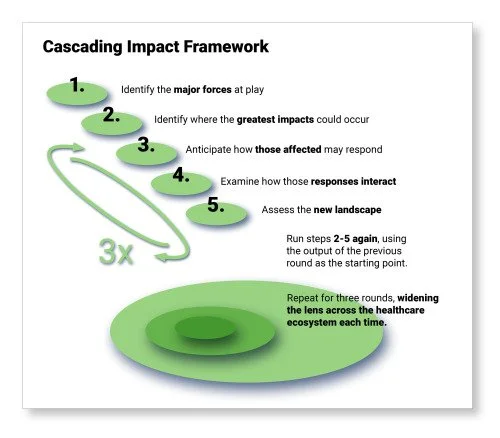
The exercise can look something like this:
Identify the major forces in play. Select three to five changes or stressors most likely to shape the period you are examining.
Identify where the greatest impacts could occur. Look across the ecosystem for where these forces could create significant stress or change, especially where multiple forces hit at once.
Anticipate how those affected may respond. Consider the decisions and changes that could follow, such as changes in services, staffing, networks, contracts, investments, partnerships, market participation, coverage, employment, or care.
Examine how those responses interact. Follow the changes with the biggest impact across the ecosystem and identify where they could create additional effects.
Assess the new landscape. Identify what is materially different about the healthcare industry at the end of the round, such as changes in capacity, demand, partner vulnerability, market economics, dependencies, or opportunities.
Playing these dynamics out over several rounds can surface underlying vulnerabilities. Many regional healthcare ecosystems depend on healthcare organizations that are already financially fragile. Some may reduce services, close locations, or not survive the coming period of change. Multi-round thinking forces critical questions: Where could critical gaps emerge? Who is likely to fill them, and how could that reshape the market? What should we be preparing for now?
The low-tech, high-impact strategic discipline
I am convinced that some of the highest-value work healthcare leaders can do during this period of change is grounded in a remarkably low-tech discipline: creating space to step back from immediate demands and think several rounds ahead. Doing so can help leaders see emerging risks and opportunities earlier, while there is still time to make intentional choices.
This kind of foresight creates the opportunity to be proactive about big market changes. Organizations you depend upon may be acquired, close, or change form. Competitors may expand, and new entrants may appear. Critical gaps may emerge that will need to be filled. In a period of profound change, thinking several rounds ahead gives leaders more time to anticipate what may be coming and more choices about where to go next.